
Call For a Free Consultation | (904) 357 0090 | Available 24/7
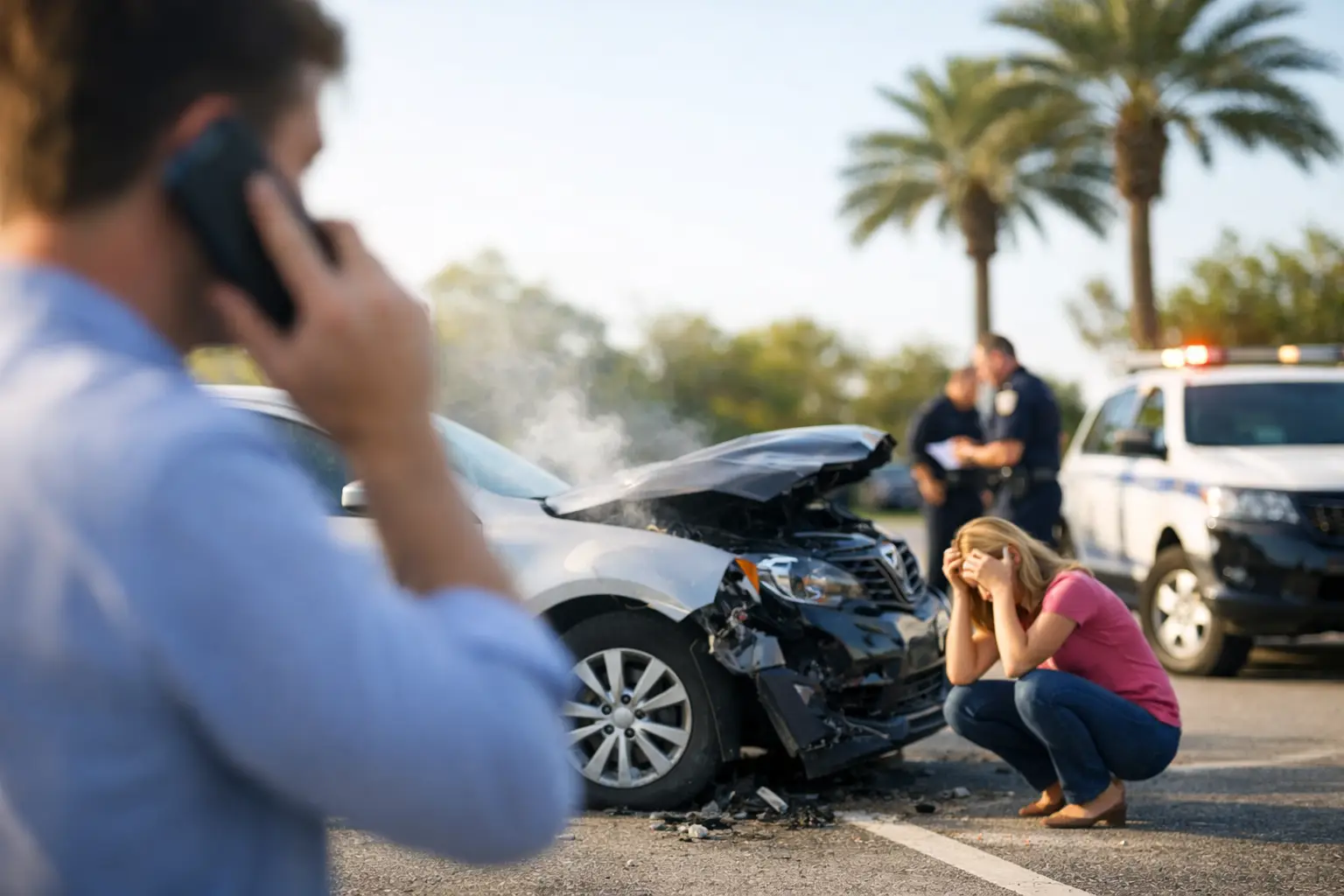
The minutes after a crash can feel unreal. You may be hurt, shaken, worried about your vehicle, or facing an insurer who seems ready with questions before you have had time to breathe. Knowing what to do after a car accident in Florida can protect your health, preserve critical evidence, and help prevent costly mistakes that could affect your family’s recovery.
If you can do so safely, move your vehicle out of traffic. Turn on your hazard lights, check on passengers, and call 911 when anyone is injured, vehicles are blocking the road, there is a fire risk, or you are unsure whether police should respond. Do not assume a crash is minor because you can walk away from it.
Adrenaline can hide pain. Neck injuries, concussions, internal injuries, and soft-tissue damage may not become obvious until hours or days later. Let emergency responders evaluate you, and seek prompt medical care even if you believe your symptoms are manageable. Tell the provider every area that hurts and explain that the pain began after a car crash.
In Florida, prompt medical care has another practical purpose. Personal Injury Protection, commonly called PIP coverage, generally requires you to receive qualifying medical services within 14 days of the crash. Waiting can put both your health and available insurance benefits at risk. Follow your doctor’s instructions, attend appointments, and do not stop treatment just because an insurance adjuster suggests you are feeling better.
A police report may become an important part of an injury claim, but it is not the whole story. Officers may not see the collision, and a report can contain mistakes or incomplete information. Still, calling law enforcement creates an official record and helps document the scene while details are fresh.
If you are physically able, use your phone to take photographs and video. Capture the vehicles from several angles, damage patterns, debris, skid marks, traffic lights, road conditions, weather, visible injuries, and the surrounding area. Photograph the other driver’s license, insurance card, license plate, and vehicle. Get names and contact details for witnesses before they leave.
You should exchange required information, but keep the conversation brief and calm. Do not apologize, speculate about what happened, or say you are not injured. A simple statement such as, “I need to be checked by a doctor,” is enough. An apology made out of courtesy can later be twisted into an argument that you accepted blame.
Before you leave, ask the officer how to obtain the crash report and write down the report number if one is available. Review the report when you receive it. If basic facts are wrong, such as the location, vehicle information, or listed witnesses, address the issue promptly. A lawyer can help determine the appropriate way to correct or supplement the record.
Most auto policies require prompt notice of a collision. Report the crash to your own insurer soon after it happens, but stick to known facts. Give the date, location, vehicles involved, and the fact that you are seeking medical evaluation if that is true. You do not need to give a recorded statement immediately, especially when you are injured, medicated, or still learning the extent of the damage.
The other driver’s insurance company may contact you quickly. Their adjuster may sound friendly and may offer to resolve the matter before the medical bills start arriving. Remember who that adjuster works for. The insurer’s goal is to limit what it pays, not to make sure you receive every dollar needed for your care and losses.
Do not sign a release, accept a quick settlement, or agree that your injuries are minor before speaking with an experienced Florida injury attorney. Once you sign a release, you may give up the right to seek more compensation if your condition worsens or a doctor identifies a serious injury later.
Evidence after a car accident can disappear faster than many people realize. Nearby businesses may record the crash on security cameras, but many systems overwrite footage within days. Vehicles get repaired or totaled, witnesses forget details, and damaged clothing or personal items can be thrown away.
Keep copies of photographs, medical records, prescriptions, bills, repair estimates, towing receipts, rental-car costs, and communications from insurers. Start a simple daily record of your symptoms and the ways the injuries interfere with work, sleep, driving, household tasks, and family life. This is not about exaggerating your pain. It is about creating an honest record of what the crash has taken from you.
Avoid posting about the collision, your activities, or your injuries on social media while a claim is pending. A single photo, comment, or check-in can be taken out of context. Even an innocent post may be used to argue that you are less hurt than you claim.
Florida’s no-fault insurance system can confuse crash victims. Your PIP coverage may pay a portion of certain medical expenses and lost income regardless of who caused the collision, subject to policy limits and legal requirements. But PIP rarely covers the full financial impact of a serious crash.
When another driver’s negligence causes substantial injuries, you may have a claim beyond PIP. Depending on the facts, compensation may include unpaid medical expenses, future treatment, lost wages, reduced earning capacity, pain and suffering, vehicle-related losses, and other damages recognized by Florida law.
Fault still matters. Florida follows a modified comparative negligence rule in most negligence cases. If you are found partly responsible, your compensation can be reduced by your percentage of fault. If you are found more than 50 percent responsible, you may be barred from recovering damages from the other party in many cases. Insurers understand these rules and often look for ways to shift blame. That is why evidence, medical documentation, and early legal guidance matter.
You should consider speaking with a lawyer as soon as possible if you suffered an injury, missed work, received a settlement offer, face disputed fault, or were hit by an uninsured, underinsured, commercial, or distracted driver. Legal help is especially urgent after a truck crash, a rideshare collision, a hit-and-run, or a crash involving a fatality.
A lawyer can investigate the collision, identify available insurance coverage, preserve video and vehicle evidence, calculate the real value of your losses, and handle insurer communications while you focus on healing. The right attorney should give you straight answers, keep you informed, and be prepared to fight when an insurer refuses to treat you fairly.
At the Law Offices of Stephen A. Smith, injured Floridians can seek a free consultation and pay no attorney fee unless the firm wins recovery. You deserve compassionate guidance, honest service, and an advocate willing to stand strong when the insurance company pushes back.
Florida deadlines for injury claims can be strict, and the right deadline depends on the facts of the crash and the parties involved. Claims involving government entities, wrongful death, or commercial vehicles may carry additional notice requirements or complications. Waiting also makes it harder to find witnesses and secure evidence.
You do not need to have every answer before asking for help. Bring the documents you have, explain what happened as clearly as you can, and let a qualified legal team assess the path forward. Knowledge is power, but faith can steady you when the road ahead feels uncertain. Take care of your body, protect the facts, and do not let an insurer decide what your future is worth.


