
Call For a Free Consultation | (904) 357 0090 | Available 24/7
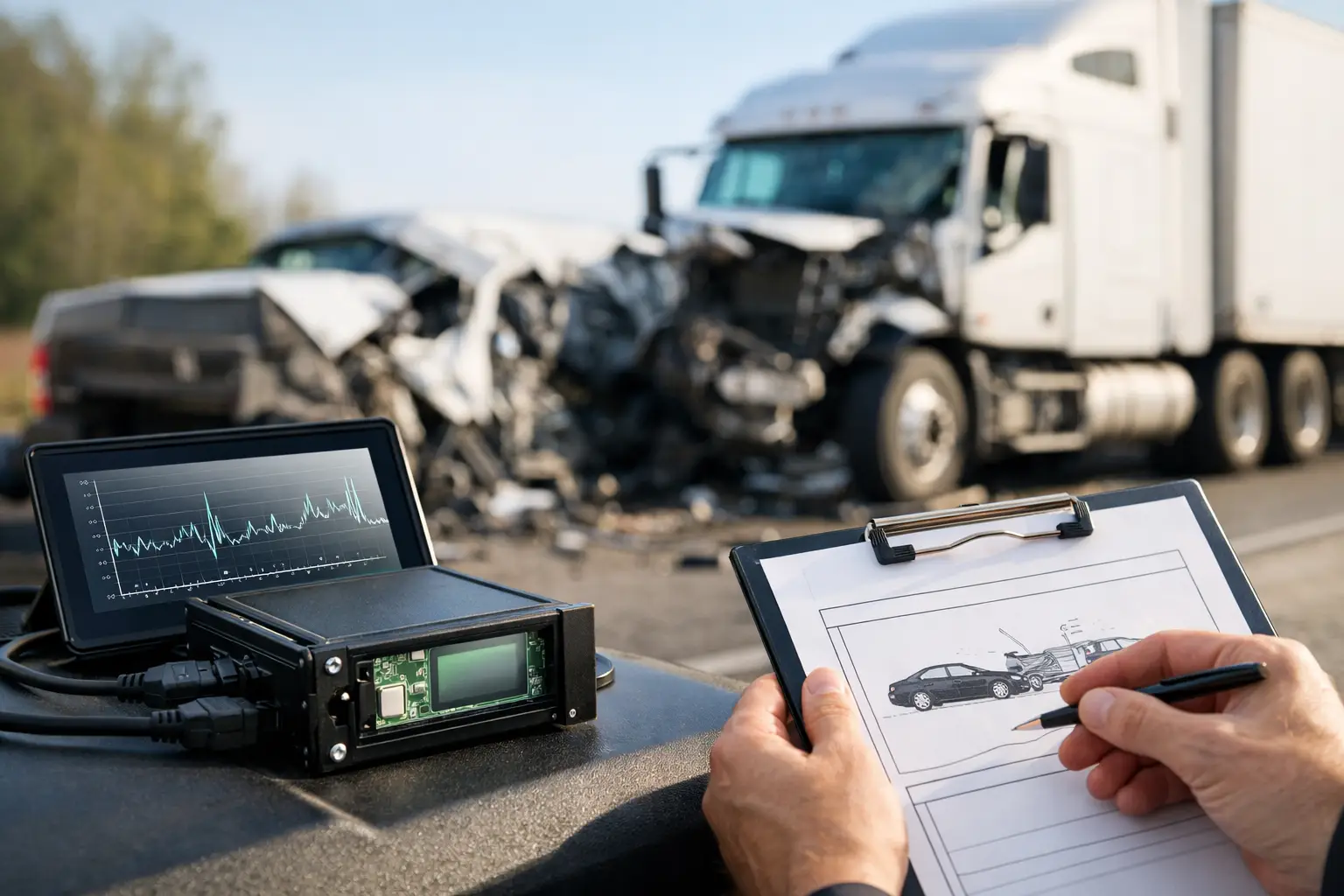
A tractor-trailer can travel the length of a football field in seconds. After a serious crash, the difference between a driver saying, “I braked,” and the data showing when the brakes were actually applied may be the difference between an unanswered question and a clear path to justice. Truck accident black box evidence can preserve facts that an insurance company, trucking company, or negligent driver may prefer to explain away.
For an injured person or grieving family, this evidence is not a technical side issue. It may show how the collision happened, whether the driver had time to react, and whether the trucking company followed its own safety obligations. But the data may not remain available for long. Prompt legal action can be critical.
“Black box” is the everyday name for electronic data stored in a commercial truck. Unlike the black boxes associated with airplanes, a truck may contain several systems that record different information. The most significant source is often the electronic control module, or ECM. Some trucks also use an event data recorder, an electronic logging device, onboard cameras, GPS systems, fleet-management software, and collision-avoidance technology.
The information available depends on the truck’s make, model, year, and equipment. There is no single universal data file that answers every question. Still, properly collected truck accident black box evidence can provide an objective account of key moments before, during, and after a wreck.
A truck’s electronic systems may record vehicle speed, engine RPM, throttle position, brake use, clutch use, cruise-control status, steering inputs, sudden deceleration, and hard-braking events. In some cases, the system may capture data for only a short period before impact. In others, it may record a broader operating history.
That distinction matters. A few seconds of pre-crash data can be powerful, but it may not reveal a driver’s conduct hours earlier. To understand the full story, an attorney may need to compare the electronic data with driver logs, dispatch records, inspection reports, cell phone records, maintenance documents, camera footage, and witness accounts.
The strongest trucking cases are built from evidence, not assumptions. Electronic records can test the explanations offered after a collision.
A driver may claim a car “came out of nowhere” or that there was no time to avoid the crash. The truck’s data may show its speed in the seconds leading up to impact, when the brakes were applied, and whether the throttle remained engaged. That information can help accident reconstruction experts evaluate stopping distance and reaction time.
Speed evidence is especially meaningful when a large commercial truck strikes a stopped vehicle, a pedestrian, a motorcycle, or a car in slowed traffic. The force involved can cause life-changing injuries even at speeds that may not sound extreme.
Black box records do not usually state that a driver was distracted, fatigued, or impaired. They can, however, expose facts that deserve a closer look. For example, a delayed braking response may be consistent with a driver who failed to notice traffic ahead. A pattern of harsh braking or abrupt steering may support questions about following too closely or operating unsafely for road conditions.
The data alone does not prove every form of negligence. It becomes more meaningful when paired with cell phone records, hours-of-service logs, video footage, witness statements, and the driver’s own testimony.
Federal and company rules limit how long commercial truck drivers may operate without required rest. Electronic logging devices are designed to track driving time and duty status. These records can help determine whether a driver exceeded allowable hours, falsely recorded rest periods, or was pressured to keep driving despite fatigue.
Fatigue cases require care. A logbook may appear compliant while dispatch messages, fuel receipts, toll records, or GPS data tell a different story. A trucking company’s delivery schedule may also show whether unrealistic deadlines encouraged unsafe driving.
Not every truck collision begins with a driver mistake. Brake defects, tire failures, lighting problems, steering issues, and neglected maintenance can all contribute to a devastating crash. Electronic data may show warning indicators, fault codes, or operating conditions connected to a mechanical problem.
The trucking company, maintenance provider, truck owner, cargo loader, or manufacturer may all have relevant responsibilities. Identifying the right parties matters because a serious injury claim should pursue accountability wherever the evidence leads.
Trucking companies and their insurers often begin investigating immediately after a major wreck. Their representatives may inspect the vehicles, take statements, photograph the scene, and protect evidence that supports their defense. Injured victims deserve the same urgency and protection.
Electronic data can be overwritten, deleted, lost during repairs, or made harder to access as time passes. Some systems record only limited events or store information in a format that requires specialized downloading tools. A damaged truck may be repaired, sold, moved, or returned to service before an injured person realizes what evidence existed.
A lawyer can send a preservation letter, sometimes called a spoliation letter, directing the trucking company and other responsible parties to retain critical evidence. Depending on the circumstances, that request may cover the tractor and trailer, ECM and event recorder data, electronic logs, dash cameras, driver qualification files, drug and alcohol testing records, dispatch communications, maintenance records, cargo documents, and post-crash inspection materials.
Sending a letter does not guarantee that every record will be preserved. It does put the company on notice that the evidence is relevant and should not be destroyed. If important evidence disappears after notice, a court may take that conduct seriously.
Insurance companies may argue that electronic data is incomplete, unreliable, or open to interpretation. Sometimes they are right that the data needs context. A recorded speed does not always establish why the driver was traveling at that speed. A braking event may not show whether traffic, weather, a mechanical failure, or another vehicle created the emergency.
That is why experienced case preparation matters. The truck should be examined before major repairs whenever possible. The crash scene, vehicle damage, roadway markings, nearby cameras, witness observations, and medical evidence all deserve careful attention. Reconstruction experts may use the physical evidence and electronic data together to create a more accurate timeline.
There are also practical trade-offs. A full forensic download and expert review can be costly, particularly in a case with disputed liability. But when a collision causes catastrophic injuries, permanent disability, or a wrongful death, the value of preserving and analyzing the data can be substantial. The question is not whether every case needs every expert. The question is what evidence is necessary to tell the truth about this crash.
Your health comes first. Seek medical care, follow treatment recommendations, and keep records of your symptoms, appointments, bills, and time missed from work. If you can do so safely, save photographs, video, contact information for witnesses, and the police report number. Do not post detailed statements about the wreck on social media or provide a recorded statement to the trucking insurer before you understand your rights.
Then speak with a truck accident attorney as soon as possible. Trucking cases are different from ordinary car crash claims because they may involve corporate defendants, federal safety rules, multiple insurance policies, and evidence controlled by the other side. A fast investigation can protect information that may never be available again.
At the Law Offices of Stephen A. Smith, we understand that a truck crash can leave a family facing pain, fear, lost income, and pressure from insurance companies all at once. You do not have to carry the legal burden by yourself. We fight for the truth, pursue the compensation our clients deserve, and bring compassionate, aggressive guidance when strength is needed most.
If a truck crash changed your life, do not assume the other side will preserve the evidence that could protect your claim. Ask for help early, hold onto faith, and give your case the chance to be heard with the facts fully on your side.


