
Call For a Free Consultation | (904) 357 0090 | Available 24/7
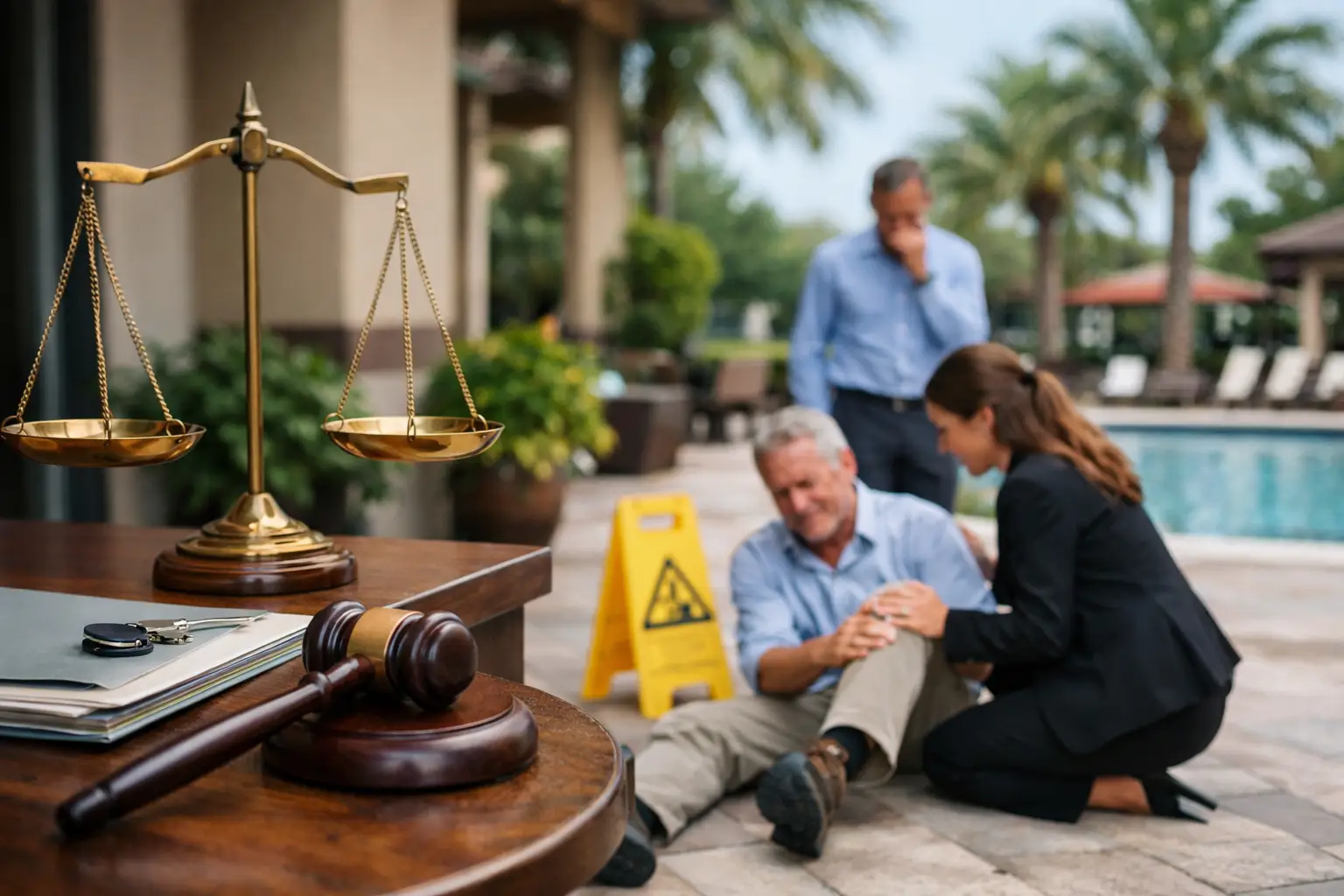
A wet floor, broken stair, poor lighting, loose handrail, or negligent security failure can change a family’s life in seconds. To prove premises liability, an injured person must do more than show that an accident happened on someone else’s property. The evidence must connect the dangerous condition to the property owner’s or business’s failure to act.
That can feel overwhelming when you are in pain, missing work, and hearing from an insurance adjuster who wants a quick statement. But you do not have to carry that burden alone. With prompt action and a careful investigation, injured Floridians can protect the facts that matter and pursue the justice they deserve.
Premises liability is the area of law that holds property owners, occupiers, managers, and sometimes tenants accountable when unsafe conditions cause injury. A claim may arise at a grocery store, apartment complex, hotel, parking lot, restaurant, construction site, private home, or other property open to visitors.
To build a successful case, your legal team generally needs to establish four points: the responsible party owed you a duty of reasonable care; a dangerous condition existed; that party knew or should have known about the condition and failed to reasonably fix it or warn visitors; and the dangerous condition caused your injuries and losses.
The details matter. A store is not automatically liable just because a customer slipped. A landlord is not automatically liable because a tenant was hurt on a staircase. The central question is whether the responsible party acted reasonably under the circumstances.
For example, a puddle created moments before a fall may be harder to prove than water that sat on a supermarket floor long enough for employees to discover it. A cracked sidewalk reported by residents for months is very different from a defect that appeared without warning that morning. The law looks closely at notice, timing, inspection practices, and whether a reasonable owner would have taken action.
The strongest cases are often built from evidence gathered before it disappears. Property owners may repair the hazard quickly. Surveillance video may be recorded over. Witnesses may forget key details. That is why taking action as soon as your medical condition allows can make a real difference.
Pictures can show what words often cannot: standing water, an absent warning sign, uneven pavement, debris, poor lighting, exposed wiring, damaged flooring, or a broken railing. Take wide photos to show the location and closer images to capture the specific danger. If possible, photograph your shoes, clothing, and visible injuries as well.
Video can be especially useful where lighting, crowding, traffic patterns, or obstructions contributed to the incident. Do not alter or post the footage online. Preserve the original file and share it with your attorney.
Report the injury to the manager, landlord, security office, or property representative. Ask that an incident report be prepared, but be careful about what you sign. Stick to the basic facts. Do not guess about what caused the fall or accept blame while you are shaken and hurt.
Many businesses have surveillance cameras. Those recordings may show the hazard, employee activity, prior customer complaints, or the incident itself. They can also show whether staff inspected the area as often as the business claims. An attorney can promptly demand that relevant footage and records be preserved.
A witness may have seen the fall, noticed the unsafe condition beforehand, heard employees discuss the problem, or observed that there were no warning cones or signs. Get names and contact information when you can. Even a short statement made soon after the event may later become valuable evidence.
In negligent security cases, witnesses may help establish whether security guards were present, gates were working, lights were out, or prior disturbances occurred at the property. These cases can require a deeper review of crime history, security policies, and foreseeable risks.
A property owner’s internal records can reveal a pattern that is not obvious on the day of the accident. Cleaning logs, inspection sheets, repair invoices, employee schedules, prior incident reports, and tenant complaints may show that the responsible party had actual notice of a hazard.
They may also establish constructive notice. In plain terms, constructive notice means the condition existed long enough, occurred often enough, or was obvious enough that the owner should have discovered it through reasonable inspections.
Florida has a specific rule for slip-and-fall claims involving a transitory foreign substance in a business establishment, such as spilled liquid or food. The injured person generally must show the business had actual or constructive knowledge of the dangerous condition and should have taken action to correct it. Evidence of footprints through a spill, dirt around liquid, dried edges, employee awareness, or an inspection gap can all matter.
Your medical care is not separate from your legal claim. Records from emergency treatment, doctors, physical therapy, specialists, and diagnostic testing help show the nature of your injuries and whether they were caused by the incident.
Keep bills, prescription receipts, work restrictions, pay records, and notes about how the injury affects daily life. Compensation may include medical expenses, lost income, reduced earning ability, pain and suffering, and other damages based on the facts of the case. A serious injury can affect more than a paycheck. It can affect a parent’s ability to care for children, a worker’s future, and a family’s peace of mind.
Insurance companies and defense lawyers rarely begin by accepting responsibility. They may argue that the danger was open and obvious, that you were distracted, that you wore improper footwear, or that the property owner had no time to discover the hazard.
Some defenses have more force than others. An obvious condition can affect a claim, but it does not always end it. A property owner may still have a duty to address a known danger when visitors must encounter it to enter, exit, work, or use the property as intended.
Florida’s comparative negligence rules can also affect recovery. If a jury finds an injured person partly responsible, damages may be reduced by that percentage. In most negligence cases, a person found more than 50% at fault may be barred from recovery. That makes early evidence collection even more critical. The other side may be building a case against you from the first report.
Do not let fear of being blamed keep you from seeking legal advice. People often second-guess themselves after an injury, especially when a manager suggests they should have been more careful. The real question is not whether you were perfect. It is whether another party failed to keep the property reasonably safe.
First, get medical care. Delaying treatment can put your health at risk and give an insurer room to question the seriousness of your injuries. Then report the incident, photograph the area if you can do so safely, and preserve the names of witnesses.
Avoid giving a recorded statement to the property owner’s insurer before you understand your rights. Adjusters may sound concerned, but their job is to limit what the company pays. They may ask questions designed to obtain a statement that can later be used against you.
It is also wise to avoid social media posts about the accident or your activities while the claim is pending. A single photo or casual comment can be taken out of context by an insurer looking for reasons to dispute your injuries.
Premises liability cases require investigation, not assumptions. A lawyer can identify every potentially responsible party, secure evidence, review property records, consult qualified experts when needed, calculate the full value of your losses, and challenge efforts to shift blame onto you.
At The Law Offices of Stephen A. Smith, we understand that an unsafe-property injury can leave you feeling ignored by the people who should have protected you. Our work is grounded in compassion, honest counsel, and the strength to fight when insurers refuse to be fair. There is no fee unless we win, and help is available 24/7.
If a dangerous condition harmed you or someone you love, do not assume the property owner will preserve the truth on its own. Get the care you need, protect what evidence you can, and let an experienced advocate carry the legal fight while you focus on healing.


