
Call For a Free Consultation | (904) 357 0090 | Available 24/7
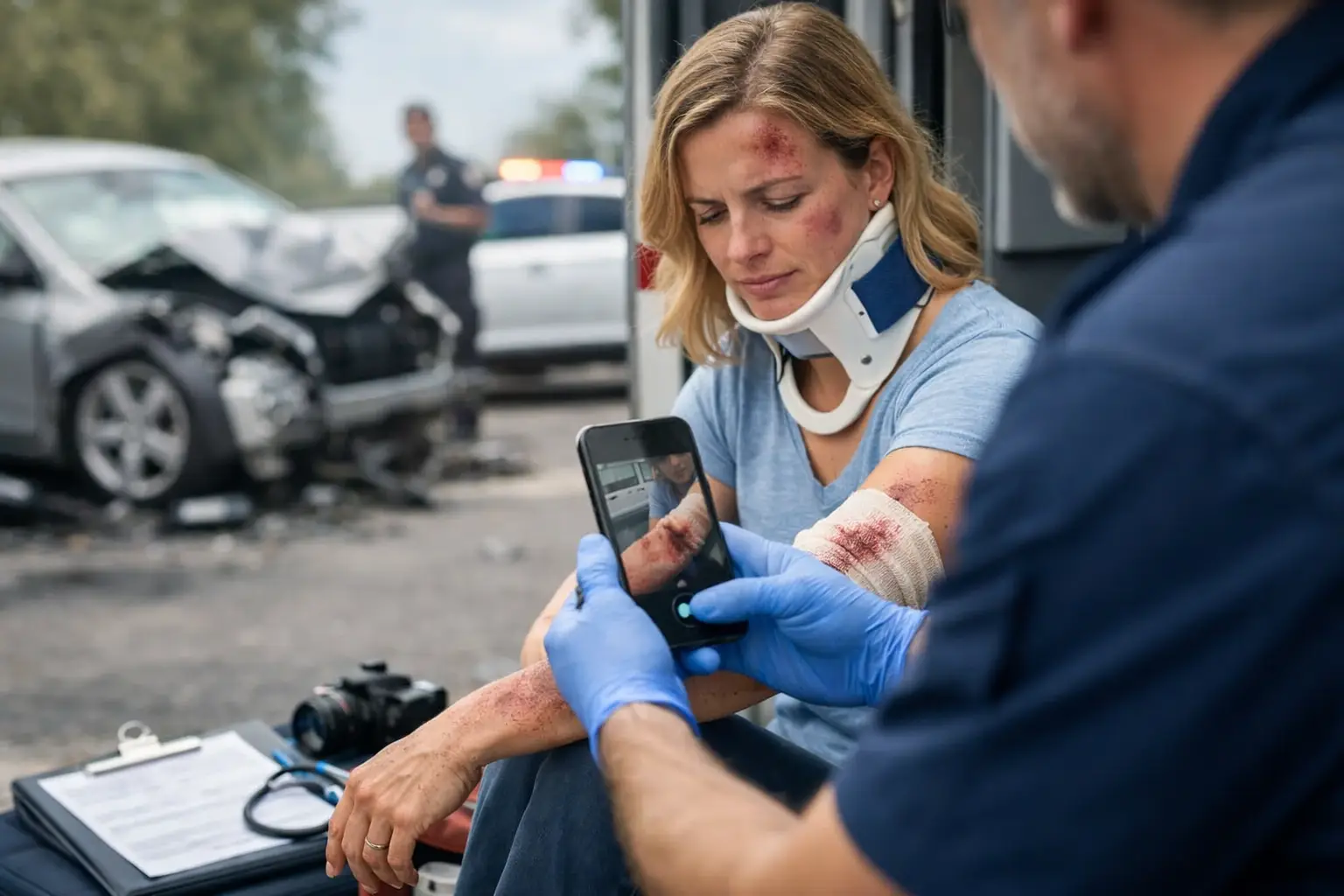
The hours after a crash can feel like a blur. You may be in pain, worried about your vehicle, trying to reach family, and fielding calls from insurance companies before you even understand what happened. Knowing how to document crash injuries gives you a clearer record of your condition, helps your medical providers treat you, and can protect your ability to seek fair compensation later.
Your health comes first. Never stay at a crash scene, take photographs, or gather paperwork when you need emergency care. Once you are safe, however, the details you preserve can make a meaningful difference. Insurance companies often look for gaps, inconsistencies, or reasons to minimize what an injured person has endured. A careful record helps tell the truth about the harm a collision has caused in your life.
Seek medical attention as soon as possible, even when you believe your pain is minor. Adrenaline can cover up symptoms after a violent impact. Neck pain, headaches, numbness, dizziness, abdominal pain, and back pain may appear or worsen hours or days later. Prompt treatment is not about building a claim. It is about protecting your body and making sure a serious injury is not missed.
Tell the doctor, urgent care provider, or emergency room staff exactly what happened. Describe the impact, where you were sitting, whether airbags deployed, whether you struck your head, and every symptom you have noticed. Do not minimize pain because you do not want to complain, and do not guess. Be honest and specific.
Keep every record connected to your care, including discharge instructions, prescriptions, imaging reports, referrals, therapy appointments, work restrictions, medical bills, and receipts for out-of-pocket expenses. If a provider recommends follow-up care, attend it. Missed appointments can hurt your recovery and may give an insurer an opening to argue that your condition was not serious.
Medical offices can provide records later, and an attorney can often help obtain them. For now, save what is available in a folder, envelope, or dedicated phone folder. Take a clear photo of paperwork if you are afraid it will get lost.
Bruises fade. Swelling goes down. Cuts heal. What may be obvious in the first week after a collision can be difficult to show months later. Take photos of visible injuries as soon as you safely can, then continue taking them as your condition changes.
Use good lighting and take both close-up and wider photographs. A close photo can show the injury itself; a wider photo can show where it is on your body. If possible, include a date stamp through your phone settings or keep the original image files, which usually retain date information.
Photograph more than bruises and cuts. Document casts, braces, stitches, mobility aids, bandages, surgical scars, and physical changes that affect daily life. A photo of you using crutches to get into your home or wearing a neck brace at a follow-up visit can help show the practical impact of your injuries.
Do not alter images, use filters, or post them publicly. Original, unedited photos are more credible. Back them up to a secure cloud account, email them to yourself, or save copies on another device.
If you are physically able and it is safe to do so, document the scene before the vehicles are moved. If you cannot, ask a trusted family member or friend to take photographs later of the vehicle damage, your injuries, and other evidence. Your safety is never worth risking for a picture.
Helpful scene documentation includes:
Preserve the damaged vehicle until it has been properly evaluated when possible. Do not authorize repairs or disposal without first speaking with your insurer and, if injuries are significant, considering legal guidance. In serious collisions, vehicle damage, event data recorders, and physical evidence may help explain the force of the crash.
Medical records document diagnoses and treatment. An injury journal documents what those injuries take from your everyday life. This does not need to be polished writing. A few honest notes each day or several times a week can be powerful.
Write down your pain level, symptoms, medications, doctor visits, and therapy sessions. Also record what you could not do because of the injury: picking up your child, sleeping through the night, driving, working a shift, attending church, exercising, cooking, or caring for your household.
Be specific. Instead of writing, “My back hurt,” write, “I woke up three times because of lower-back pain and needed help putting on my shoes.” Specific details help show the real consequences of an injury beyond a diagnosis code or a medical bill.
If you miss work, keep a record of missed days, reduced hours, lost opportunities, and communications from your employer about restrictions. Save pay stubs from before and after the crash. For self-employed people, calendars, invoices, canceled jobs, and business records can help demonstrate lost income.
Create one place for crash-related information. Keep the crash report number, insurance claim number, contact information for witnesses, tow records, repair estimates, rental-car receipts, and correspondence from insurers. Save emails, letters, voicemails, and text messages. Take screenshots of messages so they are not lost if a conversation changes or a phone is replaced.
Be cautious when speaking with the other driver’s insurance company. You can report basic facts, but you do not have to give a recorded statement or accept a quick settlement before you understand your injuries. Early offers can arrive before medical providers know whether you will need therapy, surgery, future treatment, or time away from work.
Also avoid posting about the crash, your health, or your activities on social media. A single smiling photo at a family event can be taken out of context and used to question pain, limitations, or the seriousness of your injury. Privacy is often the wiser choice while a claim is pending.
Delayed symptoms are common after car and truck crashes, particularly with soft-tissue injuries, concussions, and some spinal injuries. If new symptoms arise, seek medical care promptly and explain that you were recently involved in a collision. Note when the symptoms started, what makes them better or worse, and how they interfere with your routine.
Do not assume that a lack of visible injuries means you are unhurt. Internal injuries, traumatic brain injuries, and nerve damage may not leave an immediate mark. At the same time, do not self-diagnose. Let qualified medical professionals evaluate you and follow their recommendations.
Some claims are straightforward. Others involve disputed fault, a commercial truck, serious injuries, multiple insurance policies, uninsured drivers, or a family grieving a wrongful death. In those situations, evidence can disappear quickly, and the paperwork can become overwhelming while you are trying to heal.
A Florida personal injury lawyer can help preserve evidence, obtain records, calculate losses, communicate with insurers, and fight for compensation that accounts for medical care, lost earnings, pain, and the effect the crash has had on your family. At the Law Offices of Stephen A. Smith, clients receive compassionate and aggressive guidance, with no attorney fee unless the firm wins.
You should not have to carry the weight of recovery and a legal battle alone. Preserve what you can, get the care you need, and let your records speak honestly for the strength it takes to move forward.


