
Call For a Free Consultation | (904) 357 0090 | Available 24/7
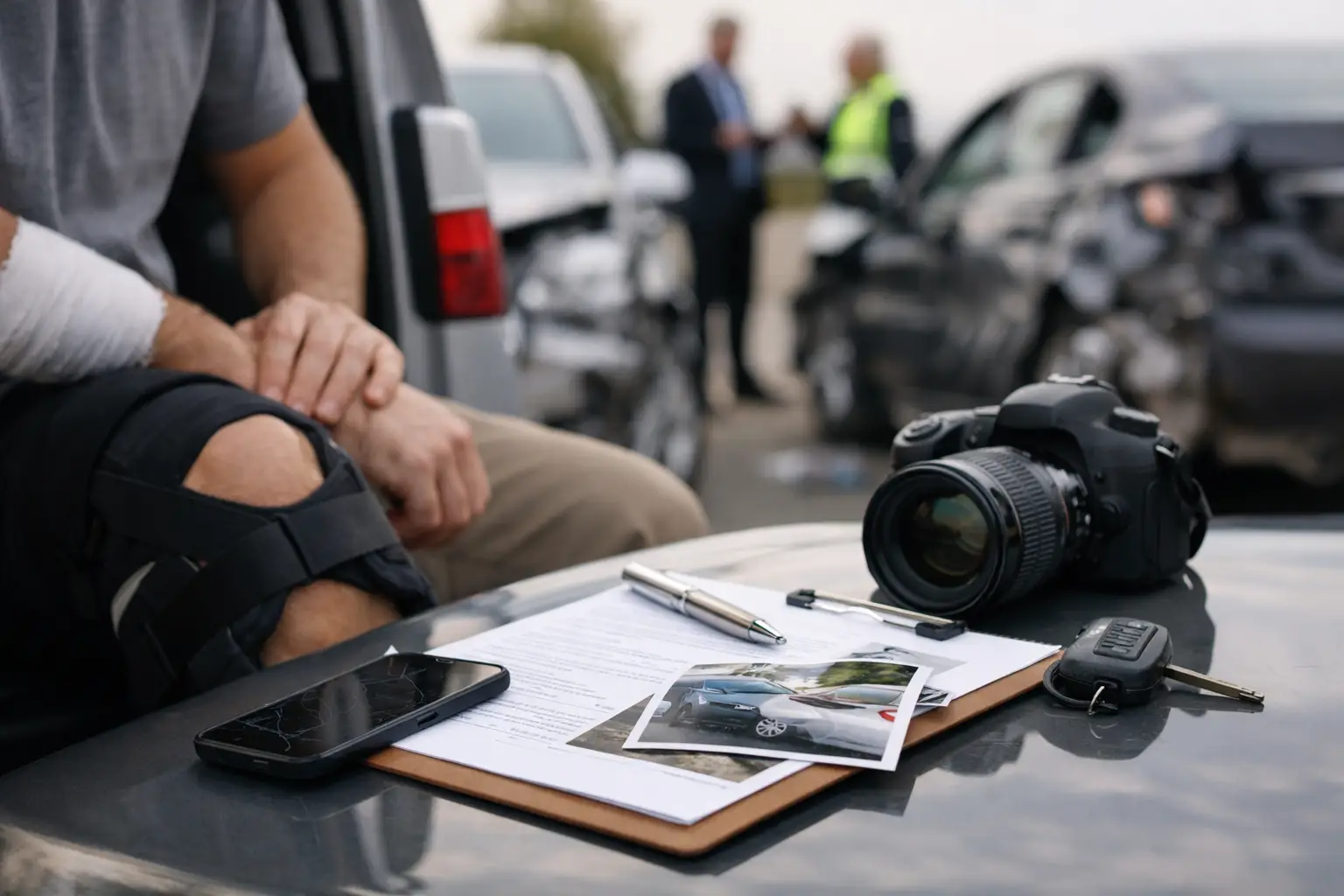
The best evidence for injury claims is often gathered in the first hours and days after an accident – while pain, confusion, and insurance calls are competing for your attention. A damaged vehicle can be repaired. A wet floor can be cleaned. A witness can forget what they saw. What is preserved early may become the proof that protects your health, your income, and your family’s future.
In Florida, an injury claim is not won simply because someone was hurt. The injured person must show what happened, who was responsible, how the incident caused the injury, and what the injury has cost. Strong evidence gives your story the support it needs when an insurance company tries to minimize, delay, or deny fair compensation.
The strongest evidence is reliable, timely, and connected to the legal questions in your case. It should help answer: What happened? Who saw it? Who caused it? What injuries resulted? What financial and personal losses followed?
A single piece of evidence rarely tells the full story. A crash report may identify the drivers and roadway conditions, but medical records explain the physical harm. Photos may show the damaged cars, but witness testimony can confirm that the other driver ran a red light. Pay records can establish lost income that a medical bill cannot.
That is why a well-prepared claim is built from layers of proof. Each layer supports the others and makes it harder for an insurer to pick apart your case.
If you are physically able and it is safe to do so, documentation at the scene can be extraordinarily valuable. Take clear photos and video from several angles before vehicles are moved, hazards are repaired, or conditions change. In a car or truck collision, capture vehicle damage, skid marks, debris, road signs, traffic signals, weather conditions, and the surrounding roadway.
For a fall on unsafe property, photograph the exact hazard: a spill, broken stair, loose handrail, poor lighting, uneven pavement, or missing warning sign. Include wider shots showing where the hazard was located and close shots showing its condition. A picture without context may leave questions. Pictures that show both the danger and its surroundings tell a clearer story.
The same principle applies to construction accidents, workplace injuries, nursing home neglect, and other negligence cases. Preserve the physical details before someone has an opportunity to change them.
Call law enforcement after a serious motor vehicle accident and request medical attention when needed. The resulting police report may document the parties involved, witness names, statements made at the scene, observations by the officer, and whether a citation was issued. It is not the final word on fault, but it can be a critical starting point.
At a business, apartment complex, job site, or nursing home, report the incident promptly and ask that an incident report be prepared. Give a truthful, concise account. Do not guess about details you do not know or minimize pain because you are trying to be polite.
Keep a copy of any report you receive, along with the name and contact information of the person who took it. If the property owner refuses to create a report, make your own written record as soon as possible. Include the date, time, location, people present, and exactly what you observed.
Medical evidence is often the heart of an injury claim. Prompt evaluation does more than support your physical recovery. It creates a record linking the incident to your symptoms and establishes the seriousness of your condition.
Tell your doctor, urgent care provider, therapist, or specialist how the injury occurred and describe every symptom honestly. Neck pain, headaches, numbness, dizziness, sleep problems, anxiety, and reduced mobility can all matter. Do not assume a symptom is too minor to mention. Some injuries, including concussions and soft-tissue injuries, become more apparent over time.
Follow recommended treatment unless there is a genuine reason you cannot. If cost, transportation, work obligations, or another barrier prevents treatment, document that problem and discuss it with your provider. Insurance companies frequently argue that gaps in care mean a person was not truly injured. The reality may be very different, but clear records help explain it.
Medical bills, diagnostic imaging, prescriptions, therapy notes, surgical recommendations, and future-care opinions can show both current losses and the care you may need later. In catastrophic injury and wrongful death cases, expert medical and financial analysis may also be necessary to measure lifelong losses.
Independent witnesses can be especially persuasive because they usually have no financial stake in the outcome. If someone saw the crash, fall, unsafe condition, or workplace incident, obtain their name, phone number, and email address if possible. A brief note about what they observed can help preserve details while memories are fresh.
Video is equally time-sensitive. Traffic cameras, business surveillance systems, doorbell cameras, dash cameras, and nearby security cameras may have captured the event. Many systems automatically record over footage within days or weeks. Waiting until an insurer disputes fault can mean the best proof is already gone.
An attorney can move quickly to request or demand preservation of relevant footage, vehicle data, company records, maintenance logs, driver qualification files, and other evidence. This is particularly important after commercial truck crashes, construction injuries, and incidents involving a business or property owner.
A fair claim should account for more than the first emergency room bill. Injuries can interrupt a career, force a family to arrange childcare, create transportation expenses, and affect the ability to handle everyday responsibilities.
Save every document connected to your losses, including medical bills, pharmacy receipts, invoices for medical equipment, mileage to appointments, repair estimates, and receipts for help you had to hire because of the injury. If you missed work, preserve pay stubs, tax records, employer letters, attendance records, and documentation of missed opportunities for overtime, commissions, or self-employment income.
A personal injury journal can also be useful. Write down your pain levels, appointments, limitations, missed family events, sleep problems, and the tasks you can no longer do without help. This is not a substitute for medical evidence. It is a way to document the human impact that a stack of bills cannot fully show.
After an accident, preserve the items and information that may later matter. This includes damaged personal property, torn clothing, a defective product, photographs, texts, call logs, and correspondence from insurers. Back up digital files in more than one place and avoid editing original photos or videos.
Be careful with social media. A smiling photo at a family gathering does not prove you are uninjured, but insurers may try to use it that way. Do not post details about the accident, arguments about fault, or updates that can be misunderstood. Privacy settings do not guarantee privacy in a legal claim.
You should also avoid giving a recorded statement to the other party’s insurer before you understand your rights. Adjusters may sound sympathetic, but their job is to protect the insurance company’s bottom line. You can provide basic necessary information without accepting blame, speculating about injuries, or agreeing to a quick settlement before the full impact of the injury is known.
The evidence available in the first week may not be available a month later. A business may repair the dangerous condition. A trucking company may hold electronic data only for a limited period. A witness may move away. Florida deadlines also apply to personal injury and wrongful death cases, and the right deadline depends on the facts of the claim.
A personal injury lawyer can investigate while the evidence is still within reach, identify all potentially responsible parties, and calculate damages beyond the insurer’s first offer. That includes medical expenses, lost income, reduced earning ability, pain and suffering, and other losses allowed under the circumstances.
At the Law Offices of Stephen A. Smith, we believe knowledge is power, but faith fuels the fight. You do not have to gather every record alone while trying to heal. Preserve what you can, seek the medical care you need, and let a trusted advocate take control of the legal burden so you can focus on the next step forward.


