
Call For a Free Consultation | (904) 357 0090 | Available 24/7
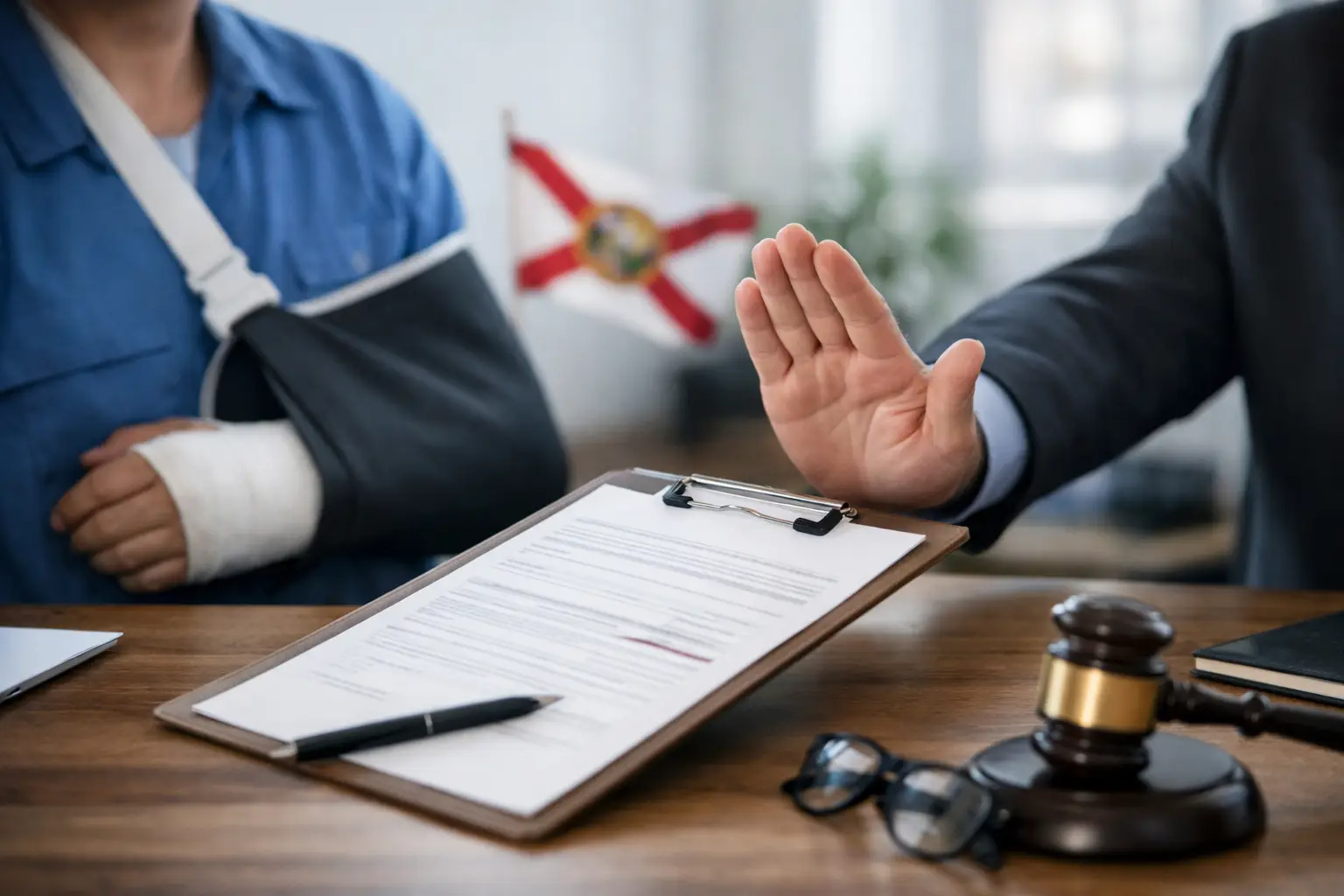
The denial letter may arrive when you are already hurting, unable to work, and wondering how you will keep up with bills. When a workers compensation claim is denied in Florida, the insurance company is not necessarily giving the final word on what happened to you or what benefits you deserve. A denial is a serious moment, but it is also a moment to act with clarity, protect your rights, and get strong guidance.
Florida workers’ compensation law can be unforgiving about procedure and deadlines. The carrier has lawyers, adjusters, medical consultants, and a business interest in limiting what it pays. You deserve someone who will look past the denial language, listen to your story, and fight for fair treatment.
An insurer must have a reason for denying a claim, but the reason may be based on incomplete facts, a disputed medical opinion, or an interpretation that can be challenged. Some denials involve a genuine legal dispute. Others arise because the employer did not get the full story, a supervisor failed to report the incident correctly, or the insurance company moved quickly to protect its bottom line.
A common denial is that the injury did not arise out of and in the course of employment. In plain terms, the carrier may claim you were not working when you got hurt, were on a personal errand, or that the accident had nothing to do with your job. This can be especially contested after a vehicle crash, a fall during a break, or an injury at an off-site work location.
The carrier may also argue that you had a preexisting condition. Having prior back pain, a bad knee, arthritis, or an old shoulder injury does not automatically eliminate a workers’ compensation claim. The real question can be whether work caused a new injury or aggravated an existing condition. That often requires careful medical evidence, not assumptions from an adjuster reviewing a file.
Other frequent reasons include a late injury report, a claimed lack of medical proof, an allegation of intoxication, or an argument that you were an independent contractor rather than an employee. A worker can also face resistance when repetitive work – such as lifting, climbing, typing, bending, or using vibrating tools – causes a condition over time rather than through one dramatic accident.
Read the denial notice carefully and save every page. It may identify the benefits the carrier is refusing to provide, such as doctor visits, physical therapy, prescriptions, wage-loss benefits, or treatment recommended by your physician. Keep the envelope, emails, text messages, medical records, work restrictions, and any paperwork you submitted.
Then write down what happened while the details are fresh. Include the date, time, location, task you were performing, equipment involved, people who saw the accident, and whom you told at work. If you reported the injury verbally, record the name of the person you spoke with and what they said. A simple contemporaneous note can become valuable when an employer later claims it was never told.
Do not give a recorded statement, sign broad medical authorizations, or accept the carrier’s explanation as final without understanding the consequences. You should be truthful and cooperative, but you do not have to let an insurance company frame the facts before you have received legal advice.
If your condition needs emergency care, seek it. For non-emergency treatment, Florida workers’ compensation generally has rules about authorized doctors and medical providers. Getting care outside the carrier’s approved network can create disputes over payment, but delaying necessary care can also harm your health and leave gaps in your medical record. The right step depends on the urgency of your condition, what treatment has been authorized, and why the carrier denied it.
Florida generally requires an injured employee to report a workplace injury within 30 days. Reporting immediately is better. Tell a supervisor, manager, foreman, human resources representative, or another person with authority, and follow up in writing if you can. Do not assume a coworker will pass the message along.
There are also deadlines for pursuing benefits. In many cases, a Petition for Benefits must be filed within two years of the accident or within one year of the last provision of authorized medical care or compensation benefits. Exceptions and special circumstances can apply, which is why waiting to see whether the carrier changes its mind can be risky.
A denial should prompt action, not panic. An attorney can review the dates, determine which deadlines apply, identify missing evidence, and move the dispute into the proper Florida workers’ compensation process. Many cases involve mediation before a judge of compensation claims decides unresolved issues. The sooner the facts and records are preserved, the stronger your position may be.
Sometimes the insurance company accepts that an accident happened but denies a specific treatment, surgery, specialist referral, diagnostic test, or work restriction. That is still a meaningful denial. An untreated injury can worsen, and a worker pushed back to the job too soon may face another accident or permanent damage.
Florida’s system gives the carrier significant control over authorized medical care, which can make these disputes frustrating. But workers have rights when treatment is delayed, denied, or handled unfairly. In some situations, a worker may request a one-time change of physician. The details matter, including whether the doctor was authorized, the nature of the request, and the carrier’s response.
Never exaggerate symptoms, but do not minimize them either. Tell your doctors exactly how the injury affects your sleep, mobility, work duties, and daily life. Follow reasonable medical instructions and keep appointments when possible. If transportation, pain, or a scheduling problem prevents you from attending, document it and notify the provider. The carrier may seize on missed care to argue that you are not truly injured.
A workplace injury can take away more than physical comfort. It can take away the paycheck your family relies on. If an authorized doctor removes you from work or imposes restrictions your employer cannot accommodate, you may be eligible for wage-loss benefits depending on the facts of your claim.
Insurers may dispute whether restrictions are necessary, whether suitable work was available, or whether your inability to earn wages stems from the workplace injury. Keep copies of every restriction note, pay stub, work schedule, job offer, and written communication from your employer. If you are offered light duty, do not simply refuse it. Find out what the job requires and whether it stays within your doctor’s restrictions. A reasonable offer may affect benefits, while an unsafe or medically improper assignment should be addressed promptly.
Workers’ compensation benefits may not cover every loss. If a negligent third party caused the injury – for example, a careless driver, subcontractor, property owner, equipment manufacturer, or another company – you could have a separate personal injury claim. That claim may seek damages workers’ compensation does not fully provide, including pain and suffering. The facts must be evaluated carefully because different rules, defendants, insurance policies, and deadlines may apply.
The Law Offices of Stephen A. Smith represents injured Floridians with compassionate and aggressive guidance. We understand that a claim denial can feel personal when all you wanted was medical care and a fair chance to recover. Our approach is to investigate the facts, challenge unfair insurance tactics, and pursue the benefits and compensation the law allows.
There is no fee unless we win, and help is available 24/7. Whether your injury happened at a construction site, in a delivery vehicle, at a hospital, warehouse, office, or job site, timely legal advice can protect options that become harder to preserve with each passing week.
Your injury does not erase your worth, your responsibility to your family, or your right to be heard. Take the denial seriously, gather your records, and seek counsel that brings both strength and compassion to the fight for justice.


