
Call For a Free Consultation | (904) 357 0090 | Available 24/7
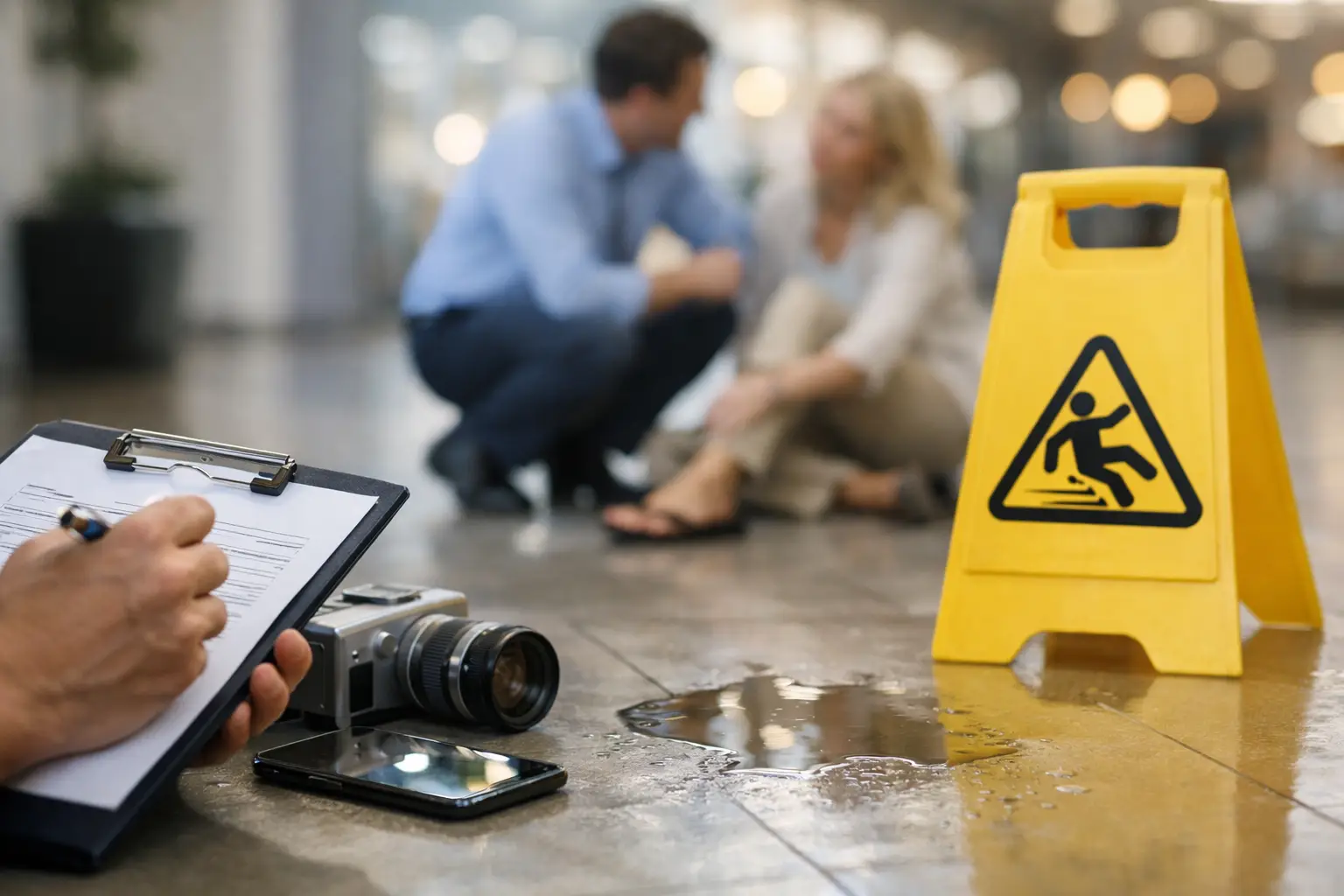
A puddle by a grocery store freezer can be gone before an injured customer reaches the emergency room. A broken handrail can be repaired that same afternoon. That is why Florida slip and fall evidence is often the difference between a claim that is taken seriously and one an insurance company tries to dismiss.
After a fall, pain and embarrassment can make people want to leave quickly. Many do. But unsafe property cases are not decided only by whether someone was hurt. They are decided by what caused the fall, who controlled the property, whether the danger should have been addressed, and what proof remains after the scene changes.
Property owners and businesses may clean a spill, replace damaged flooring, remove clutter, repair a step, or change a burned-out light shortly after an incident. Security video may automatically record over itself within days or weeks. Employees who saw what happened may later forget details, leave their jobs, or be told they do not need to speak about the event.
None of that automatically means a business is hiding something. Cleaning a hazard can be the responsible thing to do. Still, a repair does not answer the central question: how long was the dangerous condition there before someone got hurt, and did the person responsible for the property have a fair opportunity to fix it or warn people?
Florida law places real importance on notice. In many cases involving a temporary substance, such as water, food, or another spill in a business, an injured person may need evidence that the business knew or should have known about the condition. Proof may show the hazard existed long enough that it should have been discovered, or that similar conditions happened regularly enough to be foreseeable.
That is why a simple photo, a witness name, or a preserved video can carry far more weight than a vague recollection months later.
The strongest case is usually built from several pieces of proof that tell one consistent story. If your condition permits, begin preserving information at the scene. If you need emergency care, put your health first and ask a trusted family member or friend to help gather what they can.
Useful evidence may include:
Photographs should be taken as soon as possible, but do not put yourself in further danger to get them. A fall on a construction site, in a parking lot, or near broken pavement may involve traffic, equipment, or other unsafe conditions. Your safety comes first.
A picture of a wet floor proves a wet floor existed. It may not, by itself, prove how long it had been there or whether the store had an opportunity to respond. That is where a thorough investigation matters.
Surveillance footage can show when a spill occurred, whether workers passed it, whether customers tracked through it, and whether warning cones were placed only after the fall. Cleaning logs, inspection schedules, maintenance records, employee schedules, and prior complaint records may also reveal whether reasonable safety procedures were followed.
The answer depends on the setting. A fall in a private home raises different issues from a fall at a retail store, apartment complex, hotel, nursing home, restaurant, or workplace. The person or company responsible may be an owner, tenant, property manager, maintenance contractor, or another party with control over the area.
For example, a loose stair rail may point to a maintenance failure that existed for months. A spilled drink in a busy store may require a closer look at timing, inspections, and whether recurring spills were reasonably anticipated. An injured worker may also have workers’ compensation concerns, along with a possible claim against a negligent third party. Details matter, and quick assumptions can cost a family a fair recovery.
Report the fall to a manager, supervisor, landlord, or other person in charge. Give a clear, truthful account of what happened and identify the hazardous condition. Ask that an incident report be made. If you are able, take a photo of the report or write down the name and position of the person who prepared it.
Avoid guessing about facts you do not know. You do not need to apologize for falling or accept blame simply because someone asks whether you were looking where you were going. It is fine to say that you need medical attention and will provide further information later.
Seek medical care promptly, even if the injury initially feels manageable. Falls can cause concussions, fractures, spinal injuries, soft-tissue damage, and worsening pain that is not obvious in the first hour. Delaying care may give an insurer room to argue that the injury was minor or unrelated, even when you were genuinely hurt.
Then preserve your own account. Write down the date, time, exact location, weather conditions if relevant, what you were doing, what you saw, what you felt underfoot, and what employees said afterward. Memory fades quickly, especially when pain medication, stress, and medical appointments take over.
An insurance adjuster may contact you soon after a fall and sound helpful. They may ask for a recorded statement, request broad medical authorizations, or offer a fast settlement before you know whether you need surgery, therapy, time off work, or long-term care.
You have every reason to be cautious. A recorded statement can be framed around incomplete facts. A quick payment may not account for future treatment, lost earning ability, pain, or the disruption the injury has caused your family. Once a claim is settled, reopening it is usually not an option.
Florida also follows a modified comparative negligence rule in many injury cases. That means the defense may try to argue that you were partly responsible because you were distracted, wore certain shoes, ignored a warning, or entered an area they claim was unsafe. If you are found more than 50 percent responsible, you may be barred from recovering damages. Even when some responsibility is disputed, that does not automatically erase a property owner’s duty to maintain reasonably safe premises.
Evidence protects against unfair blame. Clear photographs, video, witness testimony, and records can show what truly happened instead of leaving the property owner or insurer to define the story.
A premises liability lawyer can send a prompt preservation request demanding that relevant video, incident reports, inspection logs, maintenance records, photographs, and other materials not be destroyed. The lawyer can identify the parties who may be responsible, investigate the condition, communicate with insurers, and calculate damages that go beyond the first medical bill.
This work should begin early. Florida injury claims have deadlines, and claims involving government property or unusual circumstances can involve additional notice requirements. Waiting can also make it harder to locate witnesses and secure footage.
At the Law Offices of Stephen A. Smith, we understand that a fall can leave you hurting, worried about bills, and uncertain whether anyone will believe you. You deserve compassionate and aggressive guidance from someone prepared to fight for justice, not pressure to accept less than your claim may be worth.
If you or someone you love was hurt because a property was unsafe, do not let a cleaned floor, erased video, or insurer’s version of events become the final word. Protect your health, save what you can, and seek help while the truth can still be shown.


